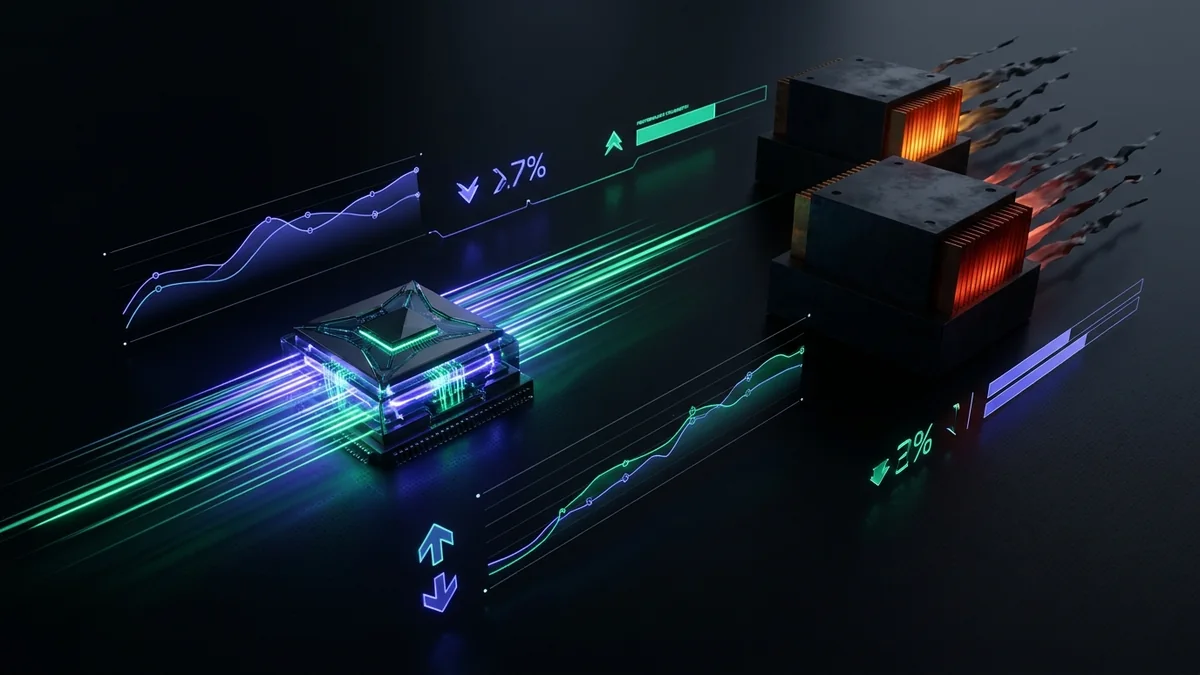
For years, serious Spin & Go and Twister players faced an expensive dilemma: either use outdated 100 BB cash-game trackers (PokerTracker 4 / Holdem Manager 3) that mash all stack depths together and lag on PostgreSQL, or pay $1,100+ per year to combine a Hand2Note 4 Pro subscription with a third-party commercial 3-Max HUD pack and a separate table-tiling utility. SpinCrusher 3-Max Poker Tracker & Positional HUD replaces that entire fragmented stack with a single native application starting at €20/month.
1. Why Legacy Cash-Game Trackers (PT4, HM3) Fail in Modern 3-Max Spins
To understand why most Spin & Go grinders abandon PokerTracker 4 (PT4) and Holdem Manager 3 (HM3) once they move past micro-stakes, you have to look at how those programs were engineered. Both PT4 and HM3 were designed in the late 2000s and early 2010s around 6-Max and 9-Max 100 BB cash games and full-ring multi-table tournaments (MTTs).
In a 100 BB cash game, effective stack depths stay relatively static (between 90 BB and 150 BB), and players occupy six or nine seats where standard aggregated statistics like global VPIP, PFR, 3-Bet, and Fold to Flop C-Bet remain reasonably valid over large sample sizes. In a 3-Max hyper-turbo Jackpot Sit & Go, however, the mathematical structure of the game mutates every two minutes.
1.1. The 8 BB to 25 BB Effective Stack Blind Spot in Generic HUDs
In a standard 500-chip Spin & Go, Twister, or Expresso tournament, all three players start at 25 Big Blinds (BB). Within four minutes, the average effective stack drops to 14–18 BB, and once one player is eliminated, the Heads-Up battle frequently takes place between 7 BB and 13 BB. In fast-fold lottery formats like iPoker Twister Flash / Wild, Winamax Expresso Nitro, or Unibet HexaPro Banzai, players start directly at 10 BB (300 chips).
When you put a generic PT4 or HM3 HUD on a 3-Max table without hundreds of custom-coded positional filters, the numbers displayed on your screen are actively misleading:
- Position Pollution (3-Way vs Heads-Up Mixing): A player who defends 68% of their Big Blinds in Heads-Up against a Small Blind min-raise and 38% of their Big Blinds in 3-Way against a Button open will show an aggregated "BB Fold to Steal" of ~47% in a generic HUD—a number that is wrong in both 3-Way and Heads-Up!
- Stack-Depth Distortion: At 22 BB effective in Small Blind vs Big Blind (BvB), an optimal regular open-shoves roughly 4% to 6% of hands (mostly fragile pocket pairs
22–55and weakAx). At 9 BB effective in BvB, that same regular open-shoves over 42% of hands. If your HUD averages their open-shove frequency across all blind levels into a single static percentage, you will make catastrophic call/fold errors. - Limp vs Raised Pot Blindness: In 3-Max Spins, Small Blind limping occurs in 45% to 75% of BvB and Heads-Up hands. Legacy cash-game HUDs focus almost exclusively on Single Raised Pots (SRP) and 3-Bet Pots, leaving you completely blind in limped pots and Iso-Raised pots where the majority of 3-Max postflop EV is won or lost.
1.2. Database Bloat, PostgreSQL Crashes, and RAM Consumption on 6+ Tables
Beyond strategic blind spots, legacy trackers suffer from severe systems-architecture bottlenecks. PokerTracker 4 requires installing, configuring, and maintaining a local PostgreSQL database server on Windows. As your database grows past 200,000 Spin & Go hands, PostgreSQL index fragmentation causes HUD updates to lag by several seconds when a new table opens, while background queries consume 2.5 GB to 4.5 GB of RAM.
Even modern general-purpose trackers like Hand2Note 4 (H2N4), when loaded with heavy third-party commercial Spin & Go HUD packs containing 4,000+ custom complex stats and game-tree popups, routinely consume 4 GB to 8 GB of RAM and spike CPU usage during database rebuilds. When you are 6-tabling or 8-tabling fast Twister or Expresso games with a 12-second timebank, a 1.5-second popup freeze costs you real money.
By contrast, SpinCrusher was engineered from line one in native C++/Python with a pre-indexed SQLite WAL (Write-Ahead Logging) schema built specifically around the 7 canonical spots of 3-Max poker. Instead of computing thousands of dynamic expressions on the fly, SpinCrusher pre-aggregates positional and stack-depth buckets at import time, keeping RAM usage under 180 MB and Win32 HUD rendering latency below 0.8 milliseconds (< 1% CPU).
2. Head-to-Head Comparison (2026): SpinCrusher vs Hand2Note 4 vs PokerTracker 4
Before investing in a tracker subscription or spending 30 hours configuring HUD profiles, review the objective technical and financial comparison below across the four main solutions used by Spin & Go, Twister, and Expresso players in 2026:
| Feature / Criterion | SpinCrusher (v2) | Hand2Note 4 + External Spin Pack | PokerTracker 4 (PT4) | Holdem Manager 3 (HM3) |
|---|---|---|---|---|
| Core Architecture | 100% Dedicated to 3-Max Spins (Regular 25 BB & Flash/Nitro 10 BB) | Generalist engine requiring expensive 3rd-party Spin HUD pack | Legacy 100 BB Cash Game & MTT tracker | Legacy Cash Game & MTT tracker |
| Database Engine & Setup Time | Zero-Config SQLite WAL (3 min setup) | Proprietary DB + complex HUD pack import (1–3 hours) | External PostgreSQL Server required (30–60 min) | Proprietary / SQL + heavy import indexing |
| RAM & CPU Footprint (6 Tables) | ~160 MB RAM · < 0.8 ms Win32 Overlay | 3.5 GB to 7.5 GB RAM (heavy popup trees) | 2.2 GB to 4.0 GB RAM (PostgreSQL workers) | 2.5 GB to 4.5 GB RAM (heavy UI thread) |
| Positional 3-Max & HU Auto-Switch | Native 7-Spot Blocks + Pre/Postflop Auto-Switch | Only if buying a $300+ dynamic HUD pack (restricted on some rooms) | Manual static groups only | Manual static groups only |
| Real-Time In-Game Auto-Tagging | 🏆 World Exclusive: 40 Pre/Postflop Badges + Hover Exploit | ❌ Manual color markers or basic static badges without exploit tooltips | ❌ Basic NoteTracker rules (no 3-Max depth badges) | ❌ Manual color tagging only |
| Tactical Popovers (vs Fish / vs Reg / MDA) | Included Natively (3-Mode Live Filter) | Requires custom MDA pack ($250–$450 extra) | ❌ Not supported natively | ❌ Not supported natively |
| Built-in Grind Tools, Tiling & 15h Tilt Guard | Included (Auto-Tiling + Click Cadence Tilt Guard) | ❌ Requires Jurojin / StarsCaption ($15–$25/mo extra) | ❌ None | ❌ None |
| 13×13 Preflop Range Editor & Trainer | Included (3-Way & HU Interactive Drill) | ❌ Requires external Range Trainer subscription | ❌ None | ❌ None |
| 100% ToS-Compliant Post-Session AI Coach | Included (Multi-LLM + Live SQL + Anti-RTA Lock) | ❌ None | ❌ None | ❌ None |
| True Total Annual Cost (12 Months) | €200/yr (Standard) to €400/yr (Pro Crusher) | $1,050 to $1,450 / year (H2N4 Pro + Spin Pack + Tiler) | $100–$160/yr + $200+ add-ons (lacks Spin features) | $100–$160/yr + add-ons (lacks Spin features) |
2.1. Breaking Down the True Cost: All-in-One Suite vs $90+/Month Fragmented Add-Ons
Many Spin & Go players underestimate what they actually spend each year on software because their subscriptions are split across three or four different vendors:
- Base Tracker License: Hand2Note 4 Pro costs roughly $59/month billed annually ($708/year) or up to $79/month billed monthly ($948/year) as soon as you want Mass Data Analysis (MDA) range research and advanced popups.
- Commercial 3-Max Spin HUD & Popup Pack: Because H2N ships with a blank default cash-game profile, Spin & Go grinders must purchase a specialized third-party HUD pack from a coaching stable or store, costing an additional $250 to $450 per year.
- Table Management & Mental / Tiling Utility: To get automatic grid tiling, emergency timebank borders, and session monitoring, players pay another $15 to $25/month ($180–$300/year) for tools like Jurojin.
- Preflop Range Viewer / Trainer App: Practicing 3-Way and Heads-Up charts requires yet another $20 to $39/month web app subscription.
In total, a mid-stakes grinder easily spends $1,150 to $1,500 per year just to maintain a working setup. With SpinCrusher's all-in-one pricing plans (starting at €20/month for Standard, €40/month for Pro Crusher with all 15 modules, or €69/month for AI Elite), every single one of those tools is unified inside one native executable—saving you $650 to $950 per year while eliminating cross-software conflicts.
3. Built-In 40-Badge In-Game Auto-Tagging and Popovers vs Fish / vs Reg / vs Pool
Where SpinCrusher truly separates itself from every legacy tracker on the market is how it delivers actionable information during the heat of a 6-table or 8-table session.
3.1. Positional Spot Blocks That Adapt to the Street
Instead of plastering a cluttered 24-cell grid next to every player, SpinCrusher organizes its Win32 HUD into 7 dedicated positional spot blocks:
- 3-Way Spots (1 to 5):
1. BTN,2. SB vs BTN,3. BB vs BTN,4. SB BvB, and5. BB BvB. - Heads-Up Duel Spots (6 & 7): As soon as the third player is eliminated, the HUD automatically switches to
6. HU SBand7. HU BB, isolating 1v1 frequencies by effective stack depth (16 BB+,11–15 BB,8–10 BB,≤ 7 BB). - Preflop-to-Postflop Auto-Switching: While cards are dealt preflop, you see only preflop frequencies (Limp, Open Raise, Open Shove, Fold to 3-Bet, Iso-Raise, 3-Bet Shove). The instant the flop hits the felt, the block switches to postflop frequencies (Flop C-Bet, Fold to C-Bet, Donk Bet, Check-Raise, Turn Barrel, River Fold) separated between Limped Pots and Raised Pots.
3.2. Real-Time In-Game Auto-Tagging (40 Badges + Instant Exploit Tooltip)
Even with clean positional blocks, cross-referencing numbers across 6 tables takes precious seconds. SpinCrusher's exclusive Rules Engine v2 evaluates every opponent at the end of each hand and displays up to 40 color-coded behavioral badges across two dedicated rows inside the player's HUD header:
- Top HUD Row (20 Preflop Archetypes): Instantly flags leaks such as
[FBB] BB Over-Fold ≥ 70%,[F3B] Fold to 3-Bet ≥ 70%,[3BS] 3-Bet Shove Deep ≥ 20%,[OS] Open-Shove Flash ≥ 75%,[LF] Limp-Fold Flash ≥ 70%, and[CS] Preflop Calling Station. - Bottom HUD Row (20 Postflop Leaks): Flags postflop imbalances including
[FCB] Fold to Flop C-Bet ≥ 60%,[CCB] Call Flop C-Bet ≥ 60%,[DNK] Donk-Bettor ≥ 25%,[XRJ] Check-Jam Flash ≥ 45%,[ROF] River Over-Folder ≥ 70%, and[BLC] River Bluff-Catcher ≥ 55%. - Hover Exploit Prescription: Hovering your cursor over any badge for 0.2 seconds displays both the exact statistical trigger and the mathematical counter-strategy (e.g., "Steal his blinds with any two cards from BTN/SB" or "Zero river bluffs against this player; thin value-bet second pair").
Want to see how this works in detail? Read our dedicated deep-dive on In-Game Automated Player Tagging in Spin & Go.
3.3. Three-Mode Tactical Popovers: vs Fish, vs Reg, and vs Pool (MDA)
A competent regular does not play the same way against a 68/12 recreational player as they do against another aggressive regular. In SpinCrusher, clicking any stat opens a tactical popover with three instant filter tabs:
- 🐟 vs FISH Mode: Shows how Villain plays specifically against recreational opponents (isolating their wide iso-raises and relentless value C-bets).
- 🦈 vs REG Mode: Isolates Villain's frequencies when battling other regulars (revealing their true 3-bet shove bluffs, check-raise traps, and river give-ups).
- 🌐 vs POOL (MDA) Mode: When you only have 15 hands on an opponent, compare their early tendencies against the exact population average (Mass Data Analysis) for that exact buy-in and stack depth across 200+ flop textures.
Over 65% of hands you play in Spin & Go and Twister occur against opponents on whom you have fewer than 40 hands. By combining Early Auto-Tagging (which triggers from 5 to 10 opportunities) with the vs POOL MDA Popover, you immediately know the mathematically highest-EV line from Hand #1.
Test the Live 3-Max HUD Simulator →4. Supported International .COM & .EU Rooms
SpinCrusher includes a multi-language hand history parser that natively reads both English and French XML/text logs without requiring any paid third-party hand converter:
- iPoker Network (
.COM&.EUTwister): Full live Win32 Positional HUD, Auto-Tagging, Popovers, and 4-curve cEV tracking on RedStar Poker, Betfair Poker, Titan Poker, ChampionPoker, Guts, Coral, BoyleSports, PMU Poker, and Betclic. Supports standard Twister, Twister Flash, and Twister Flash. Check out our Complete iPoker Twister HUD Setup Guide for RedStar & Betfair. - Winamax (
.FR/.ES/.DEExpresso & Nitro): Ultra-responsive Win32 overlay calibrated for 3-Max Expresso (25 BB) and Expresso Nitro (10 BB) with dedicated hexagonal Flash badges. - Unibet (
.COM/.EUHexaPro & HexaPro Banzai): Real-time session cEV tracking, bankroll management, Slots Advisor schedule heatmaps, and post-session MDA / AI Coach analysis 100% compliant with Unibet's no-HUD fair-play rules. - Multi-Network Unified Database: Grind RedStar Twister and Winamax Expresso simultaneously during peak evening hours while tracking your combined hourly rate (
$/hror€/hr) and 15-hour click-cadence Tilt Guard in a single Live Session Cockpit.
5. Frequently Asked Questions — Switching Your Hand Histories and Player Notes to SpinCrusher
Download the standalone SpinCrusher installer for Windows 10 & 11, import your existing hand histories and SiQnotes tags in one click, and test all 15 modules (Positional HUD, 40-Badge Auto-Tagging, MDA Leakfinder & AI Coach) with our free 48-hour trial—zero credit card required.